


Training the Eyes of Artemis
KBR Team Prepares Astronauts to Capture Humanity’s Return to the Moon
When the Artemis II astronauts launch into space, they won’t just be carrying scientific instruments and test equipment. They’ll be carrying the responsibility of showing the world humanity’s return to the moon.
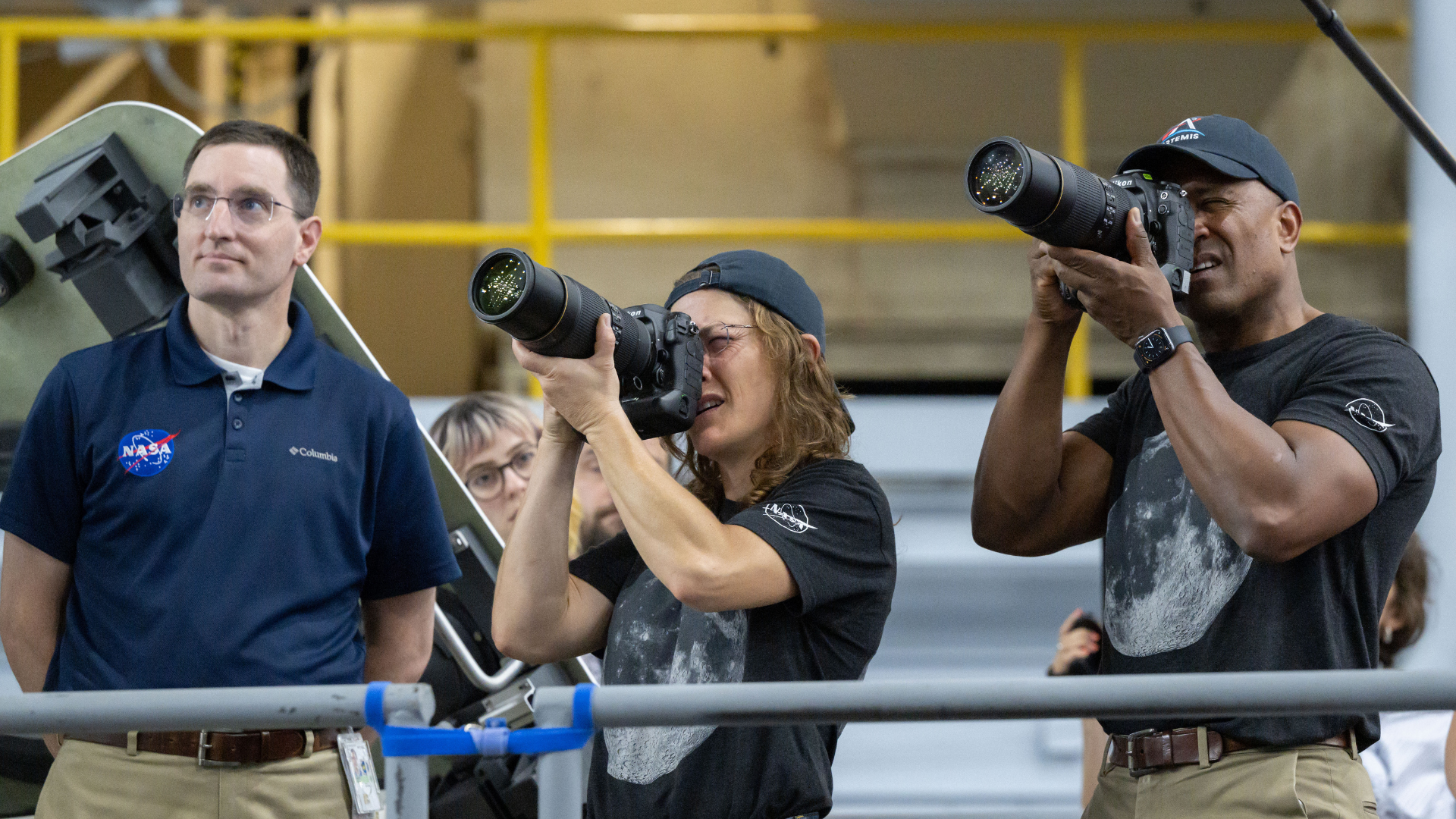
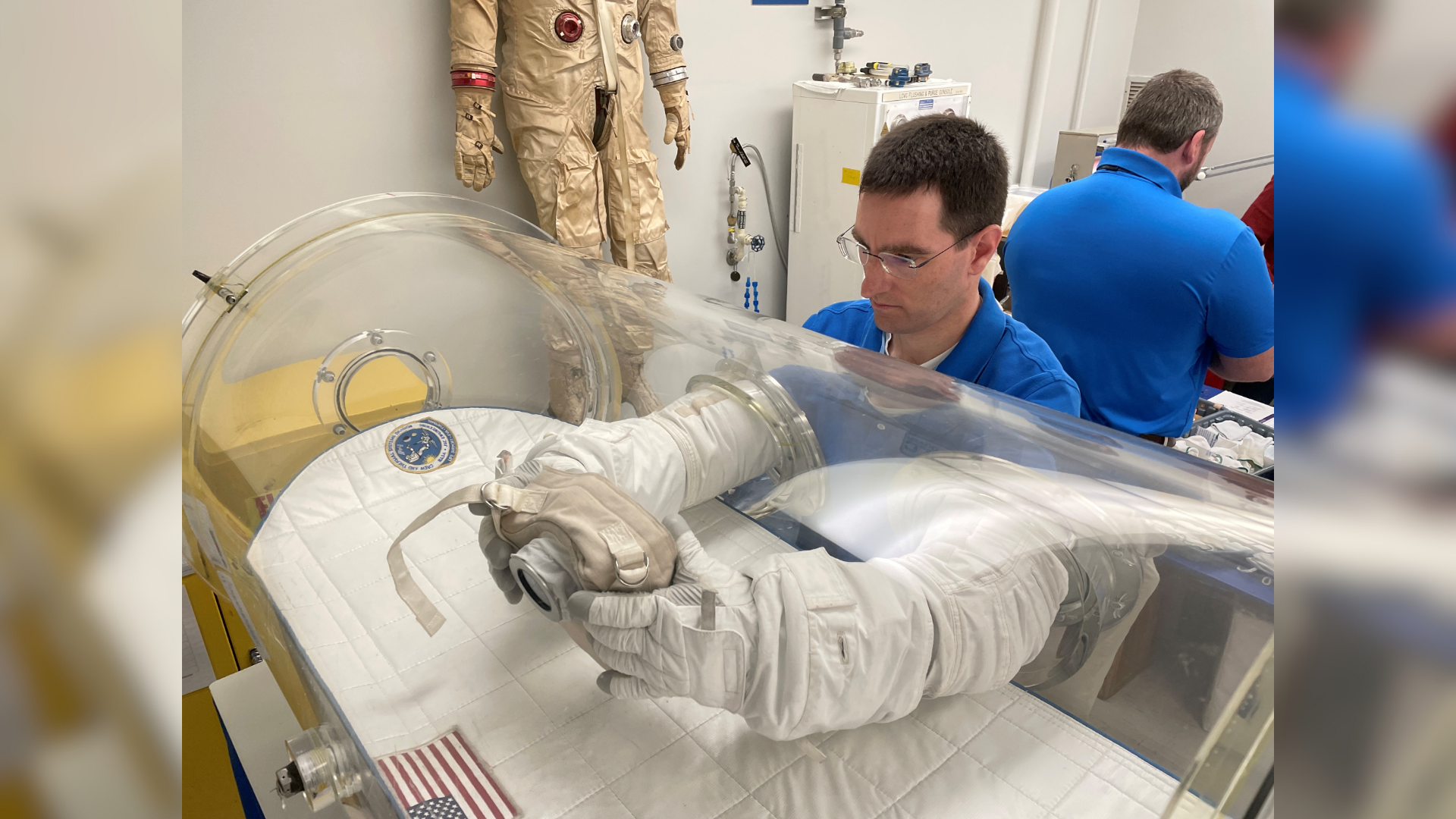
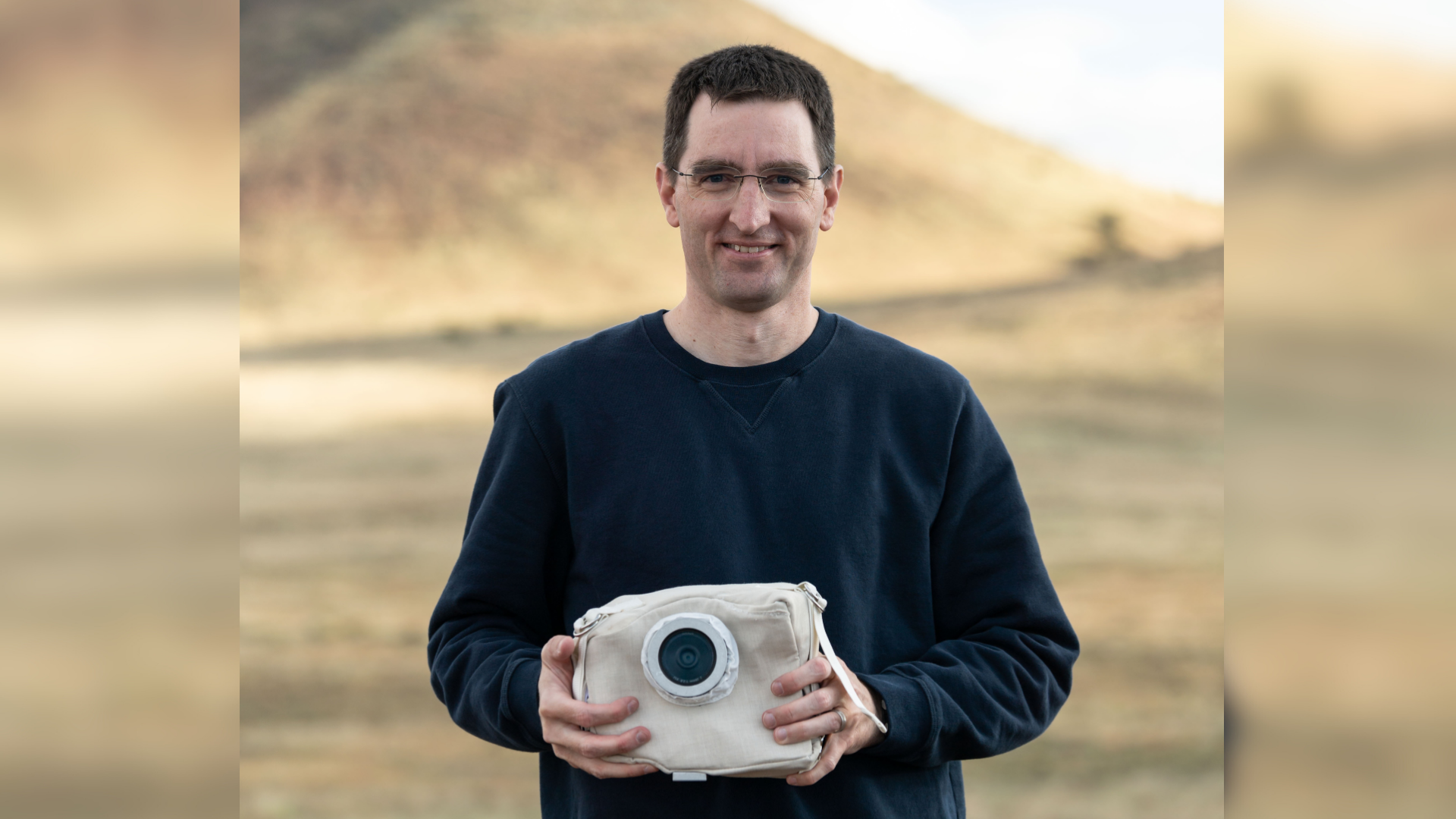
Paul Reichert, an imaging instructor on KBR’s Integrated Mission Operations Contract (IMOC) III team, is helping to make that happen by training the astronauts on how to capture photos and videos in space.
For more than two decades, Paul has worked to ensure the images astronauts send from the Space Shuttle and International Space Station are not only visually compelling but scientifically, technically and operationally sound. Today, he and the KBR team are applying those best practices for Artemis II.
“We train astronauts how to use all of their imaging equipment and write the procedures they’ll follow during the mission,” Paul said. “We’re teaching them how to get the imagery they need with the tools they have.”
Artemis II will be the first mission to carry humans to the moon in more than 50 years, making every image the crew captures part of the historic return.
That level of significance leaves little room for error.
The cameras aboard Artemis II are professional-grade systems with advanced settings and specialized lenses. Astronauts must learn to operate them in microgravity, under strict mission timelines and in conditions unforgiving of mistakes.
Paul and his IMOC III colleagues collaborate closely with scientists and engineers to determine exactly what images are needed and how they should be captured. They provide astronaut training simulations, test equipment and prepare the crew to troubleshoot malfunctions on their own. Once the mission is underway, the team will support imagery operations from inside the Mission Control Center in Houston.
More than Beautiful Photos
Imagery will play a critical role in engineering, safety and science.
Engineers, instructors and scientists on Earth will rely on photos and video to watch as astronauts exercise, test equipment or perform experiments. The images will help them determine whether a movement is performed correctly, whether equipment behaves as expected and whether any adjustments are needed to prevent injury.
“People on the ground are really invested in their data,” Paul said. “Imagery is how they understand what’s happening in space.”
The mission may also produce the most significant lunar imagery in decades. During the lunar flyby, astronauts will photograph the lunar surface, including the moon’s far side, capturing high-resolution images never seen at this level of clarity.
Public engagement is equally important because imagery allows astronauts to share scientific discoveries, operational progress and mission status with audiences on Earth. When astronauts speak live with news organizations or world leaders, the cameras must function perfectly, and the astronauts must know how to operate them. Paul and his team prepare them through hands-on training and simulated malfunctions, so if something goes wrong in space, they know how to fix it.
The Power of an Image
For Paul, the power of imagery extends far beyond the technology that fuels it. Photos and videos have the ability to inspire.
“Many people are visual learners,” he said. “They see an image, and it makes an impression. One person might be inspired to become an astronaut. For an engineer, it might motivate them to improve a product or solve a problem. It might encourage people to investigate why certain craters are there. It might inspire someone to become a scientist.”
He points to the iconic 1968 “Earthrise” photo , taken by Apollo 8 as the crew rounded the moon’s far side. It shows the planet as a fragile, luminous orb suspended in the blackness of space. The image galvanized environmental movements and reshaped how humanity sees itself and Earth.
“That picture still inspires people,” he said. “It shows this is home. We have to protect it, but we also need to explore because this is the only home we have.”
A Career Built on Images that Matter
Paul’s interest in photography began at the Rochester Institute of Technology, where he discovered a love for the technical side. An internship at NASA’s Langley Research Center opened the door to a role at NASA’s Johnson Space Center’s Photo/TV group, and he has been working in space-related imagery ever since. He has spent the last five and a half years with KBR, supporting NASA’s human spaceflight missions.
“You can really help astronauts show the world what we’re doing or get the imagery that helps us solve a problem,” he said.
Astronauts arrive with a wide range of experience. Some have only used a smartphone camera; others are highly skilled photographers. Paul and his IMOC colleagues teach every crew member, regardless of skill level, to meet the mission’s demanding requirements.
“They all want to succeed,” he said. “That’s what really matters.”
As Artemis II prepares to carry humans around the moon, Paul and his team will be ready, ensuring that when history unfolds, the world will be able to see it.