


KBR Brings Earth Into Focus Through Advanced Satellite Observations
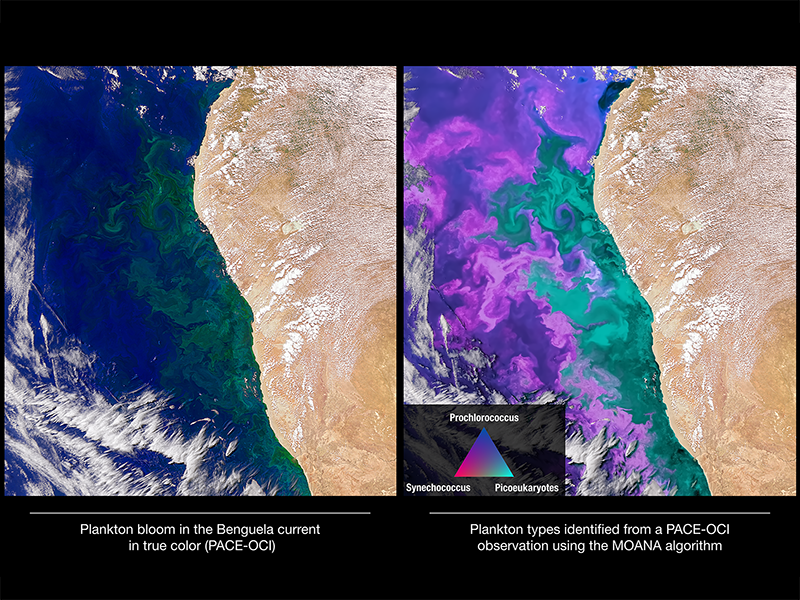

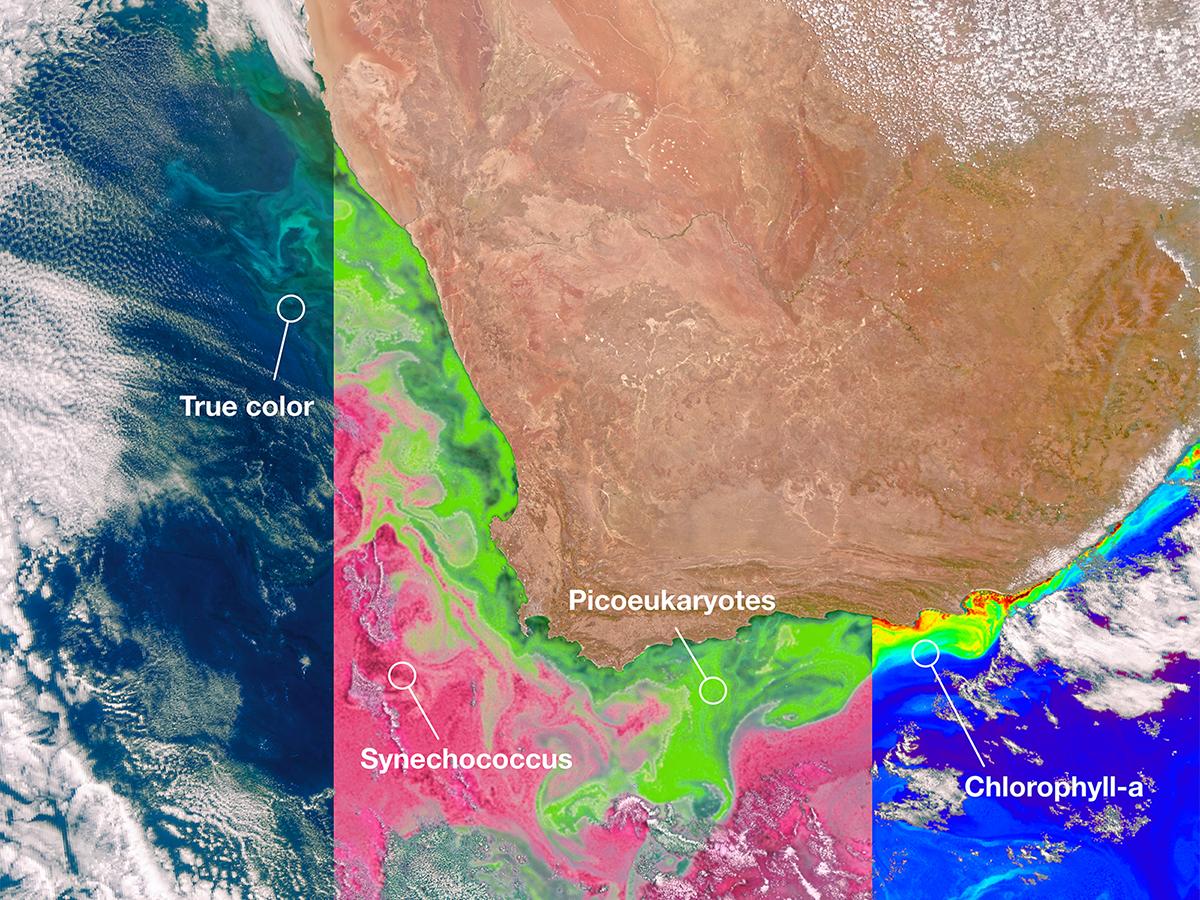
KBR is helping deliver satellite measurements that provide scientists with a deeper understanding of Earth’s atmosphere and clouds.
NASA’s Plankton, Aerosol, Cloud, ocean Ecosystem (PACE) satellite mission, which observes Earth across ultraviolet, visible and infrared wavelengths, captures images beyond what a traditional camera can see. These observations help scientists monitor ocean health and identify dust, smoke, sea salt and other atmospheric particles, providing new insights into the interactions between Earth’s oceans, atmosphere and climate.
Such detailed PACE data allows scientists to distinguish between different kinds of aerosols and track wildfire smoke and dust movement while studying how aerosols interact with clouds and oceans. What appears as a faint haze or drifting plume becomes something that can be tracked and analyzed.
“PACE shows how engineering quietly supports science,” said Nora Bozzolo, director of PACE’s program management for KBR’s Advanced Engineering & Operations division. “We focus on making sure the mission’s systems perform as designed so scientists can rely on the data and communities can prepare for challenges like wildfire smoke and dust moving through the atmosphere.”
KBR teams were instrumental in developing one of PACE’s key instruments, the Ocean Color Instrument and advanced polarimeters, which observes subtle changes in light reflected from the ocean and atmosphere. This instrument required highly precise, innovative engineering to capture detailed measurements.
The company also supported spacecraft mechanical engineering and contamination control, and it assisted with the assembly and testing of all instruments and the spacecraft. KBR experts were on site at Cape Canaveral Space Force Station in Florida, helping execute the PACE launch and early mission activities in February 2024. This engineering ensures the instruments and systems perform reliably in orbit, providing the consistent measurements scientists depend on.
“That level of insight starts with getting the engineering right,” said Bozzolo. “Every component has to perform with precision, and every system has to work together the way it’s designed to in space. That’s what allows the mission to deliver consistent, high-quality observations.”
PACE’s accurate data and daily operations help scientists detect change in ocean and freshwater conditions, including early signs of harmful algae blooms that can affect water quality. KBR performs all aspects of PACE mission operations, ensuring data is collected, managed and delivered reliably as PACE builds a long-term picture of Earth’s condition.
“The engineering makes it possible to look closer, measure more precisely and, ultimately, understand more deeply,” said Bozzolo. “It’s an honor to be part of the team that makes that happen.”